
Notes from Spain: What I’d Change Now
November 3, 2026
Before we left for Spain, I wrote quite a lot about how I had planned this trip. Then, while we were there, I wrote about what happened when the itinerary stopped cooperating.
Now we’re home, the laundry is done, the wine we shipped back should arrive next week, and I’ve had enough distance to look at the trip as a whole.
I wouldn’t plan it exactly the same way again.
That sounds more critical than I mean it to. We loved this trip and enjoyed every place we went, including the ones that tested us. I’m glad we experienced all of it the way we did the first time. But there is a difference between enjoying a trip and deciding afterward that every choice is one I’d make again. Now I have answers to some of the questions I had before we left.
The place I underestimated most
Barcelona was supposed to be the easy ending. Three nights. A private tour of Sagrada Família and Park Güell. A few meals. Some wandering.
Barcelona became my favorite stop.
My expectations were fairly low. It’s a huge city, crowded, heavily touristed, and I had heard enough about local frustration with tourism that I wasn’t sure how much I would enjoy being there. Sagrada Família and Park Güell were things I felt we should see, but if I’m being completely truthful, I had mentally put them in the category of famous places we would check off while we were there.
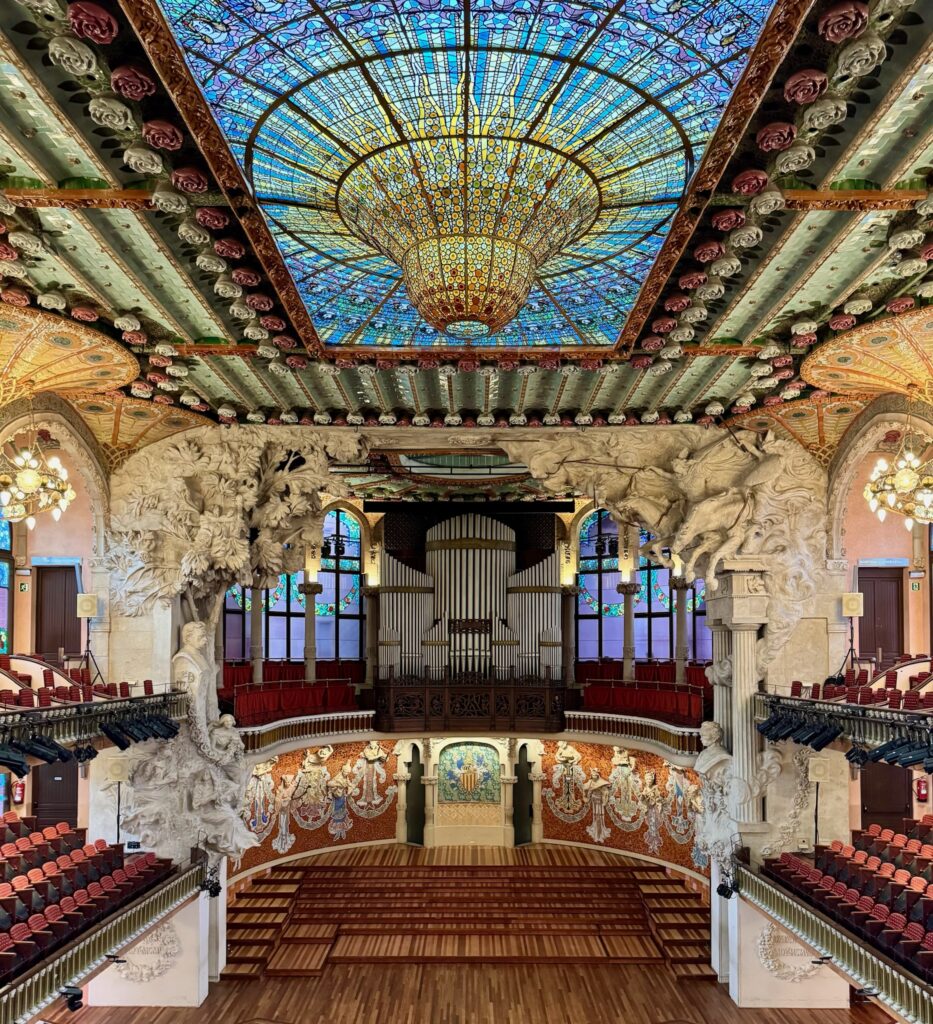
Our first day was rainy, which interfered with our usual strategy of learning a city by walking around it. We started looking for something indoors instead and ended up at the Palau de la Música Catalana. We did the self-guided audio tour, which took about an hour, and the building was extraordinary. The stained glass, mosaics and sculptural details are everywhere. The names of great composers are worked into the decoration around the seating areas, which made the room’s musical history feel very present. We heard the pipe organ play twice while we were there, and it was hauntingly beautiful.
Afterward we walked to the nearby Mercat de Santa Caterina, explored the food stalls, and found a restaurant for lunch that we liked enough that we went back again for lunch the next day.
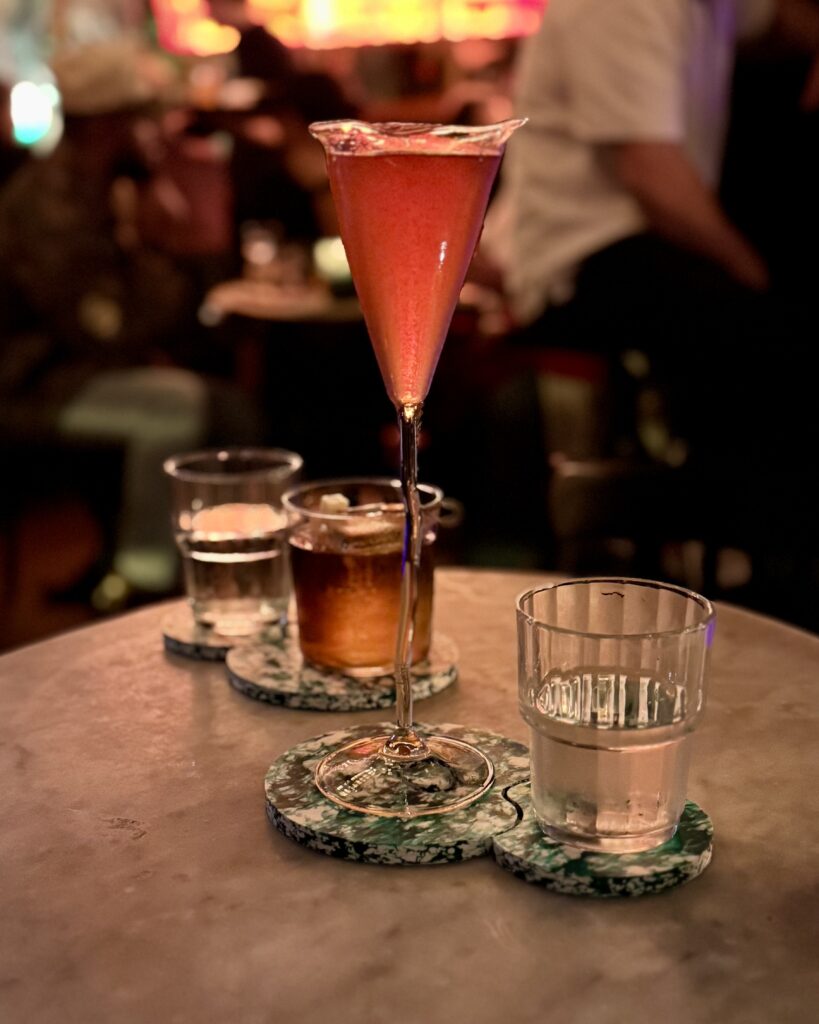
We also made it to Paradiso, one of The World’s 50 Best Bars. We’ve been to several highly ranked bars all over the world and they’ve all been excellent, but Paradiso stood out even among them. The interior was stunning, the service was excellent, and the cocktails were some of the best we’ve ever had.
Then came Sagrada Família.
Our guide, Anna, was enthusiastic from the moment we met her, and within a few minutes we knew we liked her. Before we went inside, she spent a long time with us in front of the completed façades, explaining the stories Gaudí built into them and pointing out details I never would have noticed. She kept saying the same thing: “Every element is intentional.” Then she would show us another example.
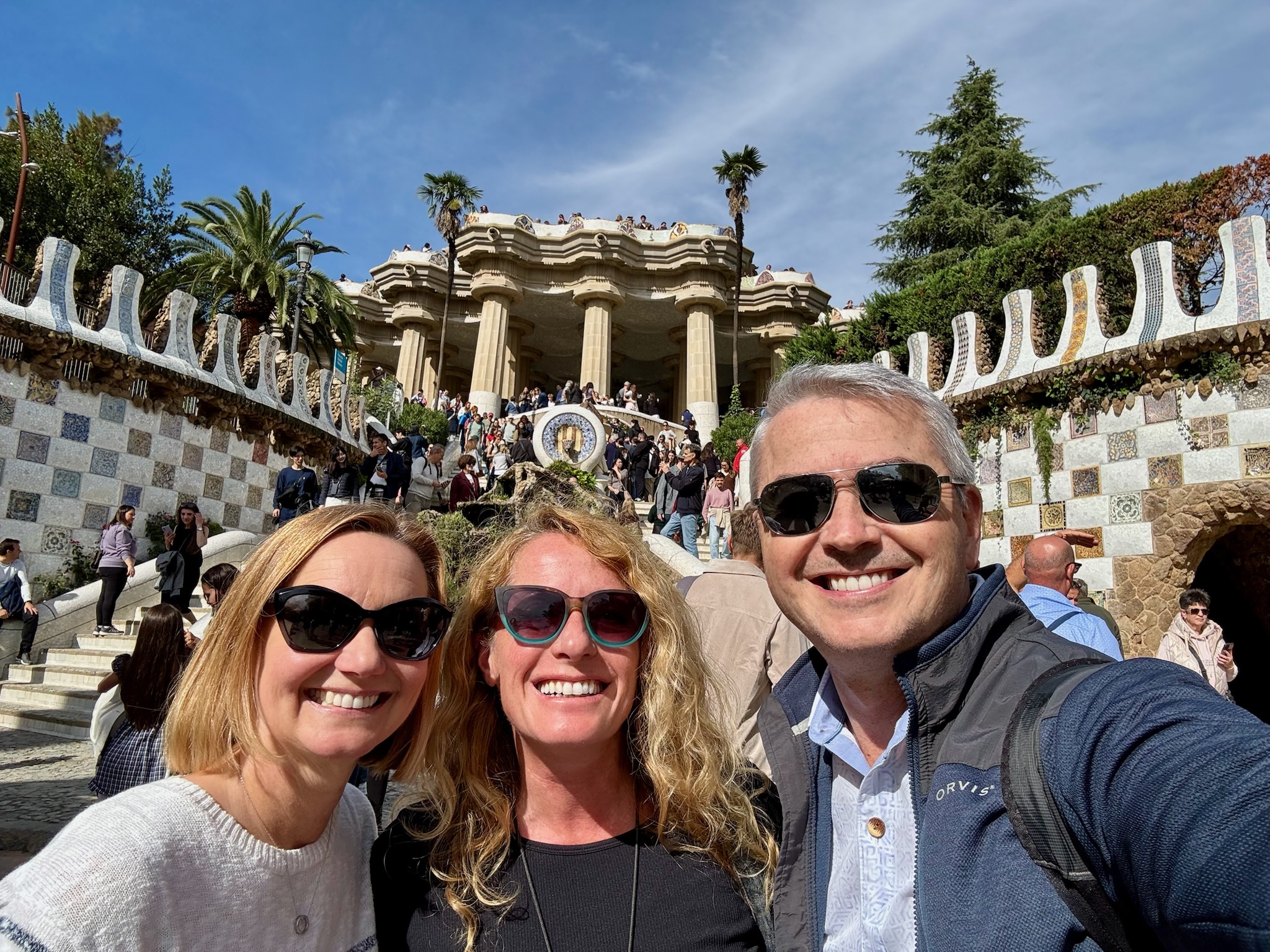
By the time we walked inside, Anna had already given us so much context that I was seeing far more than I would have on my own. The interior itself was extraordinary. The scale, the light, the color—it completely floored me. Sagrada Família was crowded. Very crowded. Anna dislikes crowds about as much as I do, which turned out to be an excellent quality in a guide. She somehow kept positioning us out of the worst of them while maintaining a clear view of whatever she was explaining.
The crowds didn’t diminish the experience. I had expected to appreciate Sagrada Família. Appreciate is too mild a word. It humbled me.
We went from there to Park Güell, where the weather had cleared and the sun came out. On the drive back to our hotel, Anna had the driver detour past several of Gaudí’s other buildings because she wanted us to see them too. Our tour ran well past its scheduled end because she simply kept finding things she wanted to show us.
She was the best guide we had during the entire trip, and Barcelona, which I had treated almost as an obligatory final stop, was the place I most wished we had given more time.
What two days in Rioja clarified
One of the questions I had before this trip was how much value a local destination specialist would add. Our specialist for Jerez, Rioja and Barcelona was excellent to work with. They planned our experiences, understood what I was looking for, and stayed in contact before and after every tour. I always felt supported. The actual days in Rioja were more uneven.
We had the same local guide for both days. She drove us, clearly knew the region extremely well, and seemed to know people everywhere we went. The first day started at Conde de los Andes, where we had a scheduled private visit. Their underground cellars are enormous, and we spent roughly the first hour touring them and learning some of the winery’s history. It was interesting, but the experience never quite came together for me.
Our winery host was fairly new. We talked a little about winemaking as we passed the fermentation tanks, but not in much depth, and by the time we reached the tasting room she was running up against her next appointment. We tasted three wines, two of them white, which felt like an odd balance for the experience we had come to Rioja for. Our guide asked if we could taste another red, but our host declined before leaving for her next tour. She eventually found someone else she knew at the winery who brought out an older red Rioja for us. That wine was lovely, but by then the visit felt a little improvised. There was also more pressure to purchase than I enjoy in a tasting.
Our second winery that day was even less what I had hoped for. There was no planned private appointment. We ended up in a public tasting room with other visitors while wines were poured fairly quickly. It was almost exactly the kind of experience I had specifically asked to avoid.
What I had wanted to include that afternoon was a guided visit to the wine museum in Briones. I knew it was extensive, which was precisely why I thought having a private guide who understood both the museum and our interests could be useful: show us what matters, give us context and keep us from spending hours trying to absorb everything. That morning, I learned we weren’t going. The suggestion seemed to be that the museum would take too much time, which to me somewhat defeated the purpose of having an expert guide.
Afterward we ate lunch at a restaurant in Briones specializing in chuletillas de cordero—small lamb chops cooked over an open flame fueled by old grape vines. It was simple, local and delicious. It was also a substantial lunch at around 3:00 in the afternoon, so we cancelled our dinner reservation that evening.
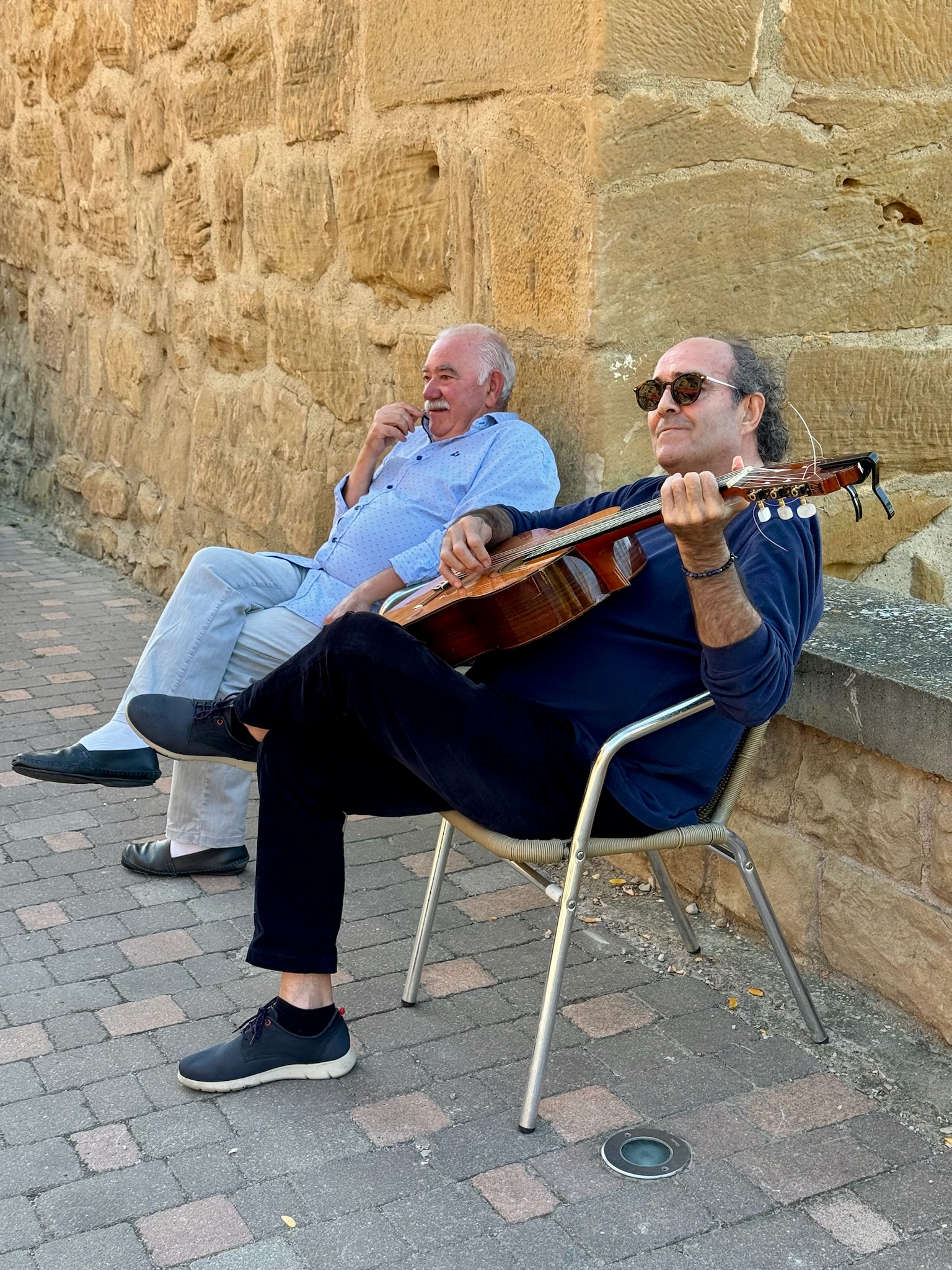
When we stepped back outside after lunch, two older men were sitting in chairs on the otherwise empty street, one holding a guitar. He spoke to our guide in Spanish, then asked if we wanted him to sing for us. They settled on a song and started playing. Within a few minutes, a small crowd had gathered around them.
It was completely unplanned and one of my favorite moments of the day.
The second Rioja day was much better. At Murua, our host spent time outside with us looking over the vineyards and explaining the soils, climate, and biodynamic farming before we went inside to see how the wines were made. We toured the cellars and finished with a relaxed private tasting where he explained each wine and what made it distinctive. That was exactly the kind of winery visit I had hoped for.
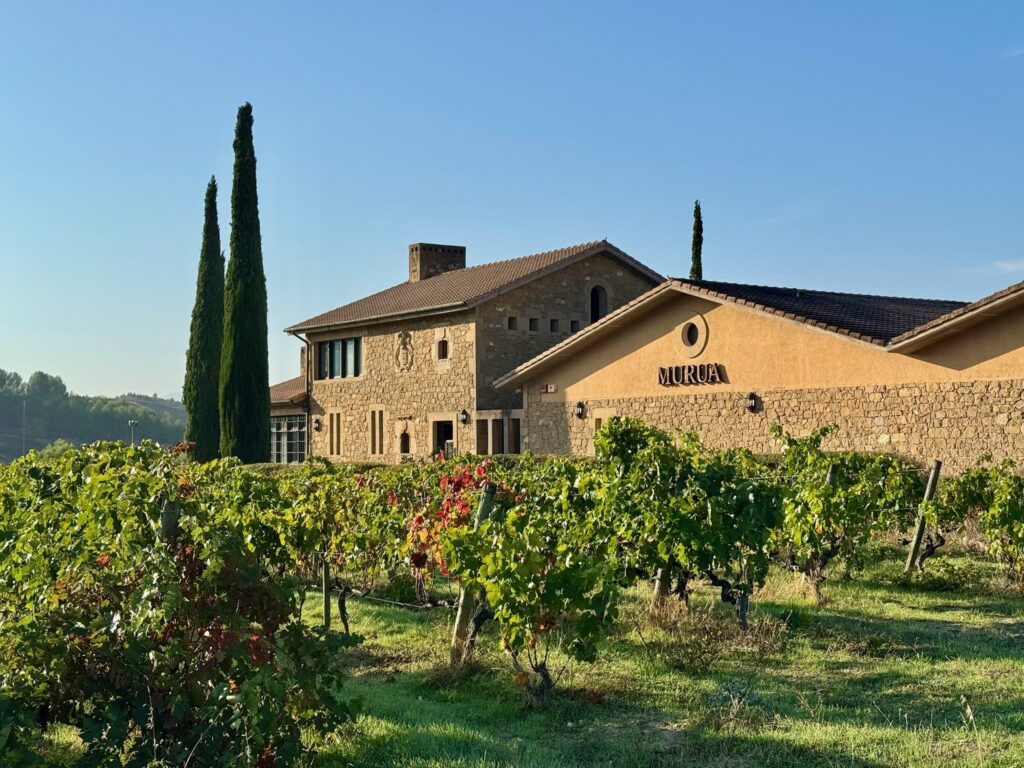
Our second scheduled winery that day was also private and very good. The host even pointed out that we could buy many of their wines back home, which I appreciated enormously after learning how quickly international wine shipping can change the economics of an otherwise reasonable purchase.
We had a dinner reservation that evening we were genuinely looking forward to, so this time we asked our guide to skip the big late lunch and take us somewhere for a few pintxos instead. The pintxos themselves weren’t particularly memorable, but they did exactly what we needed them to do: left us hungry for dinner.
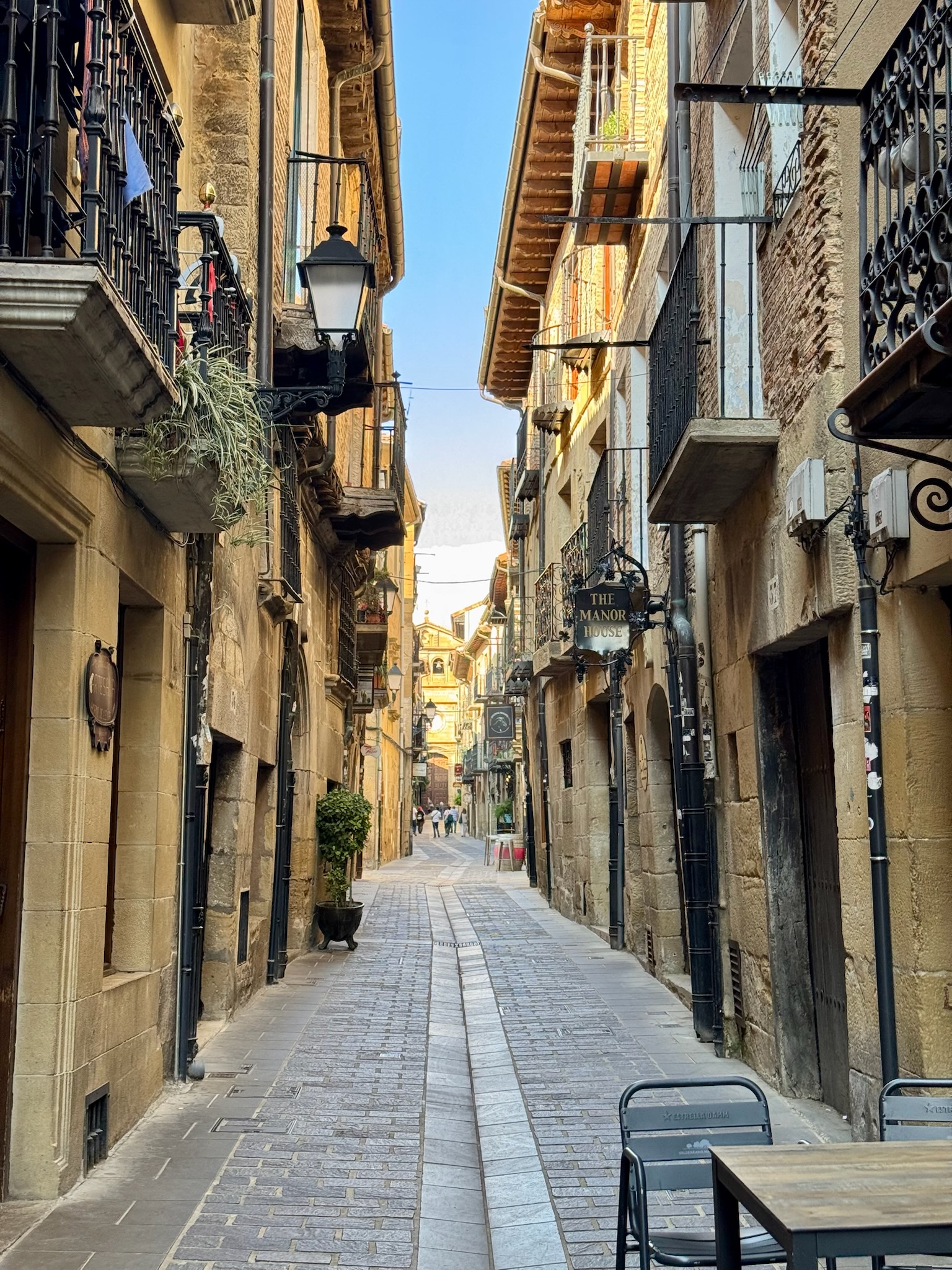
We also had time to wander through Laguardia, a medieval hill town whose charter dates to 1164. Much of the old center is still enclosed by 13th-century walls, but what fascinated me most was what we couldn’t see. Beneath the town is an extensive network of wine cellars dug under the houses beginning in the 16th century. We came across a diagram showing just how much of Laguardia exists underground, with cellars extending beneath nearly the entire historic center.
Above ground, we were perfectly happy just wandering the narrow stone streets and looking out over the surrounding wine country.
Where the local layer earned its place
After we got home, Greg and I sat down and went through the tours, guides and experiences from the entire trip. I came away with a more nuanced view of local destination specialists than I had before we left.
On my own trips, I’m there. I’m in the same time zone, I know what’s happening as it happens, and I’m comfortable researching, making decisions and solving problems myself. In a place like Spain, where I understand the broader travel environment and can readily research hotels, restaurants, guides and experiences, I expect an additional planning layer to bring me something I couldn’t easily create myself.
Sometimes that is access. Our visit with Jaime at Bodegas Faustino González in Jerez is a perfect example. Sometimes it is exceptional local judgment—knowing the person, place or experience I wouldn’t have known to search for.
For a client traveling without me, though, the calculation is broader. Having a trusted local partner means there is someone on the ground who knows the destination, knows the people involved and can step in quickly when something changes. If a guide is delayed, a venue changes plans or something else goes sideways, there is someone locally positioned to help solve it.
That is one of the real advantages of the network I have through Virtuoso: access to local experts around the world who can provide that layer of support when it adds value to the trip.
Spain didn’t leave me thinking every trip needs a local specialist. It left me more specific about what I expect one to contribute.
The thing I would change first
Before we left, the routing made sense to me. Mallorca, Granada, Seville, Rioja and Barcelona are far enough apart that flying between several of them seemed like the logical choice. Granada disappeared when our flight was cancelled, leaving us with four destinations instead of five.
And even four was a lot.
Not because the trip was too long. If anything, the length helped. But every move has a cost that is easy to underestimate when you’re looking at an itinerary on a screen: packing, checking out, getting to the airport, security, waiting, delays, baggage, getting into the next city, checking into another hotel and unpacking. Then doing it again a few days later.
We had flight delays on nearly every segment, which only made those transition days feel longer. But the larger issue wasn’t the delays. It was how many transition days we’d built into the trip in the first place.
If I were planning this trip again, I wouldn’t spend much energy trying to make those transitions more efficient, I’d eliminate one. I’d narrow it down to three destinations.
I’m not sure which destinations I would have eliminated, which is why I’m glad we did it the way we did the first time. Seville felt about right at six nights, particularly with Jerez as a day trip. Barcelona was far too short at three. Rioja could easily have used another day, especially since we decided to spend our one unscheduled day at the hotel instead of venturing out because of a storm that rolled through.
Palacio de Samaniego made staying put especially easy though. The hotel has only nine rooms and is filled with original pieces from Ariane de Rothschild’s collection. Murano glass, paintings and objects from around the world appear throughout the common spaces and guest rooms. It feels less like a conventional hotel decorated with art than a very beautiful private home where somebody happens to have an extraordinary collection.
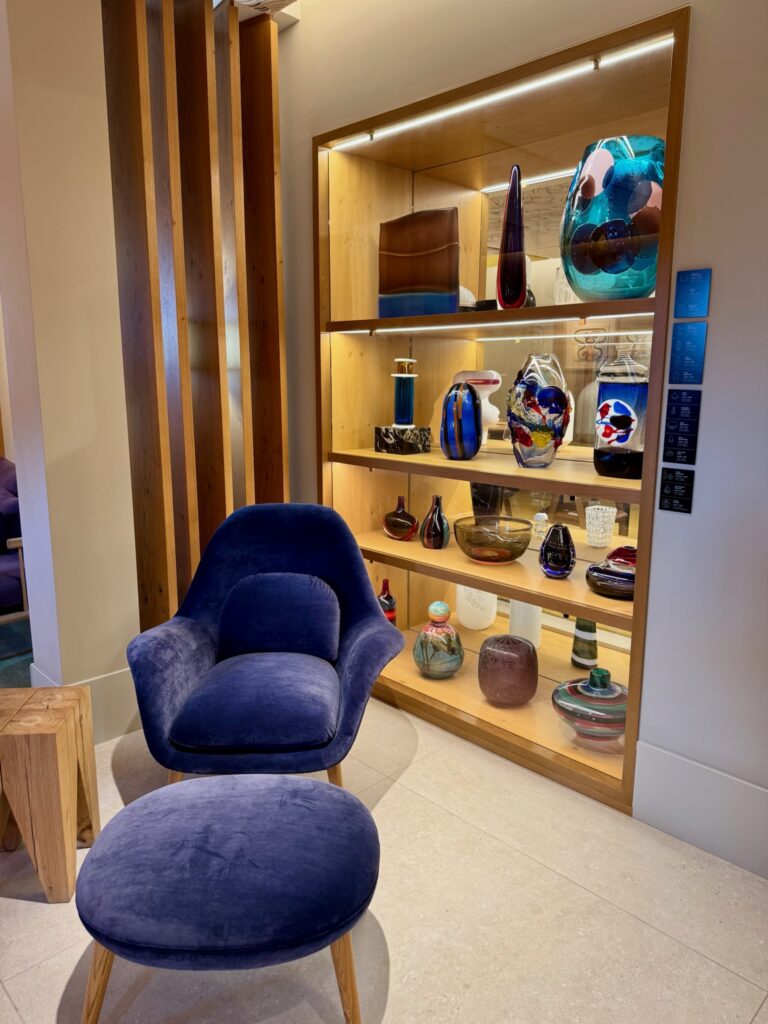
We briefly considered taking a taxi back to Briones to visit the wine museum we missed on the first day. Then we looked at the weather, looked at our room, and stayed exactly where we were. We had nowhere we particularly needed to be, and it turned out to be a very good, relaxing day.
The irony is that a longer trip made me more aware of transition fatigue, not less. There was enough time to do everything. I’m just less convinced we needed to.
We came home with plenty of reasons to go back. We still haven’t seen the Alhambra. Anna gave me a list of places in Barcelona we didn’t get to. And there’s still a wine museum in Briones I want to visit.
That feels like a pretty good way to leave Spain.


