
What Cruising Looks Like When You Get It Right
May 26, 2026
There’s a version of cruising most people have experienced, or heard enough about to have written it off entirely.
The ships that carry five, six, seven thousand passengers. The bars with lines at any hour. The pool deck that feels like a waiting room. The dining room food that declined year by year until the industry’s solution arrived: specialty restaurants, available for an extra fee. We did it for years. Eventually we just stopped going.
What brought us back wasn’t a better version of that product. It was a completely different one.
Last summer, Greg and I sailed the Ritz-Carlton Ilma through the Mediterranean — Athens to Rome, with stops in the Greek Isles, Sicily, and Sorrento. From the moment we stepped aboard it was different. A personal concierge met us at the gangway, stayed with us through the entire embarkation, and introduced us to the CEO of the yacht collection, who was disembarking from the prior voyage and stopped to welcome us. We were in the entry-level suite category. We were treated like owners.
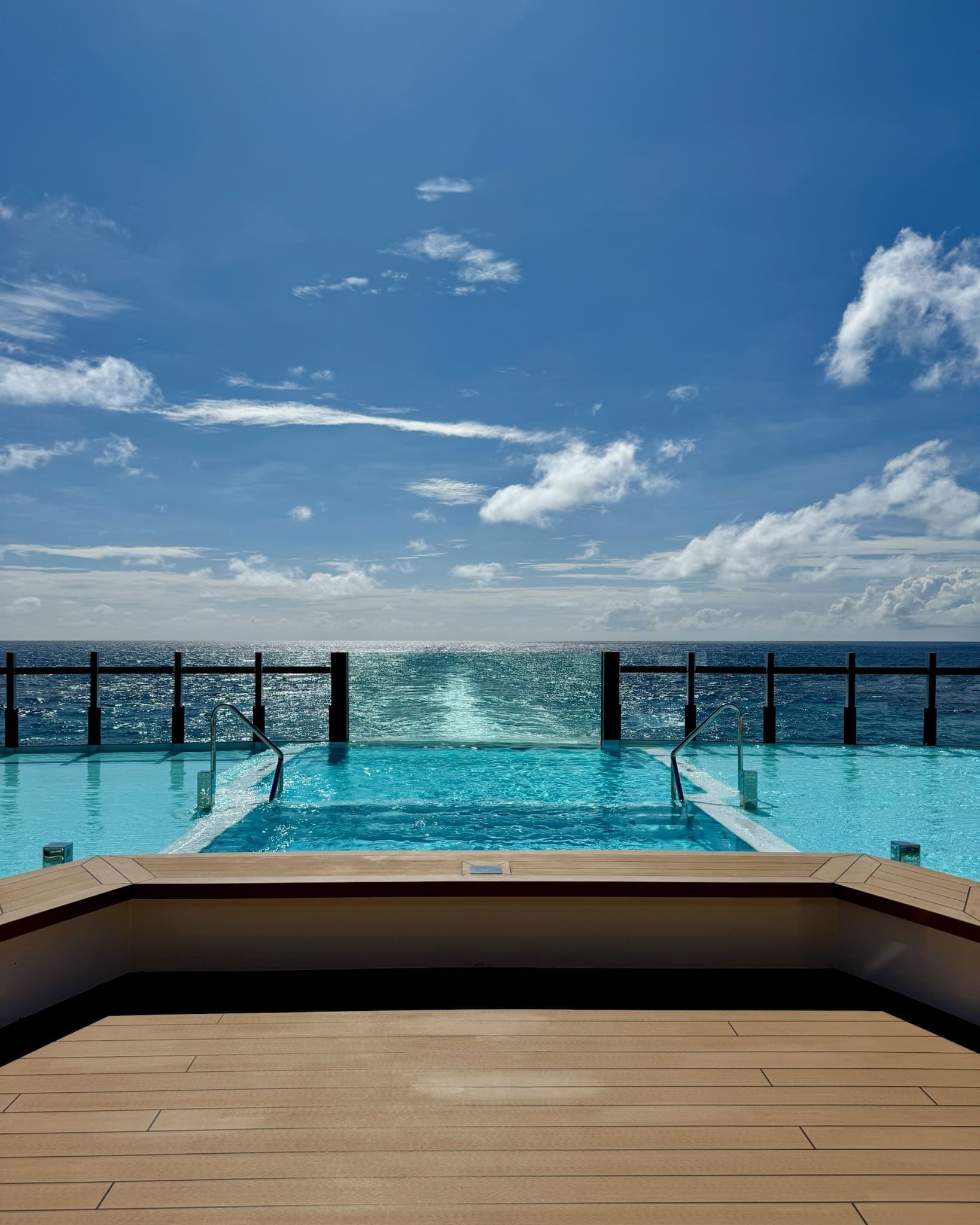
In December we joined the Luminara — the Ritz-Carlton’s newest ship — for a repositioning voyage across the Indian Ocean from Mauritius through the Seychelles to the Maldives. Five sea days on open water, ports that most cruise itineraries never reach, and not a flag-wielding tour guide in sight. Just the place, at its own pace.
What we found on both voyages wasn’t just better service — though the service was extraordinary. It was a fundamentally different relationship between the ship, the destination, and the people onboard. The guests were unpretentious, genuinely curious, easy to talk to. People who happened to love great travel and weren’t particularly interested in being seen doing it. We made real friends on both voyages.
Cruising isn’t one thing. It never was.
The mistake most people make is judging the entire category by the mainstream end of it. But beyond that distinction, ocean cruising is only one of three fundamentally different products available to travelers today, and within each category there is a range spanning from budget to mainstream to ultra luxury.
Here’s a framework to help to think about the right fit for you.
- What do you want your days to actually look like?
This is the question that narrows the universe faster than any other.
If you want to wake up somewhere new each day, walk off the ship into the center of a medieval city, and have the destination be unambiguously the point — that’s river cruising. Ships carry 100 to 180 guests, dock in the heart of cities and towns rather than distant port terminals, and often organize around a specific theme: wine and gastronomy along the Rhône, Christmas markets along the Danube, ancient temples on the Mekong. At the most intimate end sit luxury hotel barges — as few as eight guests, a private chef, a sommelier, and days that unfold entirely at your pace through French waterways.
If you want to go somewhere genuinely remote — Antarctica, the Arctic, Norway’s fjords, the Galapagos — and spend your days on Zodiac landings, wildlife encounters, and guided exploration of places most people never reach, that’s expedition cruising. Small ships, naturalist guides, active days, and a base camp that happens to be exceptionally comfortable.
If you want exceptional food and service, a mix of sea days and carefully chosen ports, and an onboard experience worth being present for — that’s luxury ocean cruising. And within that category, the hotel-branded yacht — Ritz-Carlton, Four Seasons, Orient Express — represents something genuinely new: a service philosophy rooted in hospitality rather than cruise operations.
- What is the relationship you want between the ship and the destination?
The spectrum runs from ship-as-destination at one end to ship-as-vehicle at the other.
At the mainstream end, the ship is the product. The ports are interesting additions. At the luxury yacht end, the ship is exceptional — but its purpose is to be a moving luxury hotel that provides access to places worth going. A 500-guest luxury yacht, designed with generous public spaces and unhurried dining, feels like a private club. A 500-guest mainstream ship packed with amenities competing for the same square footage feels like a hotel operating at capacity. The passenger count is identical. The experience is not.
- What kind of access do you want to the places you visit?
Large ships require large port infrastructure. That infrastructure is almost never located where the interesting part of the destination actually is. In Grand Cayman, large ships tender passengers to a commercial waterfront built entirely around cruise traffic. In St. Thomas, the beautiful parts of the island require a shore excursion. Civitavecchia — the port for Rome — puts you an hour and a half from the city you came to see.
Smaller ships change this equation. A luxury yacht can dock in a working harbor that sees two ships a year rather than twenty in a day. A river ship ties up in the center of a medieval city and you walk off into it. An expedition ship anchors off an uninhabited coastline and puts you ashore by Zodiac. The gap between where a ship docks and where you actually want to be is worth understanding before you book.
- The practical filters
Once you know what kind of experience you’re after, a handful of practical considerations refine the choice.
Seasonality matters — Antarctica only sails November through March, the Danube Christmas markets are December only, the Mekong is best October through April.
Duration shapes what’s realistic — river cruises typically run seven to fourteen nights, expedition itineraries rarely compress below ten days.
And true cost is where most people miscalculate: when you honestly account for drinks, wifi surcharges, specialty dining fees, and gratuities on a mainstream sailing, the gap between mainstream and luxury often narrows considerably.
A note on booking
As a Virtuoso affiliated advisor, I’m able to offer benefits on luxury cruise sailings that aren’t available when booking direct.
On the Ritz-Carlton Yacht Collection, that includes a complimentary dinner for two at Setu — an intimate 10-course experience that’s the kind of meal you’d expect from a Michelin-starred restaurant, valued at $375 per person with wine pairing.
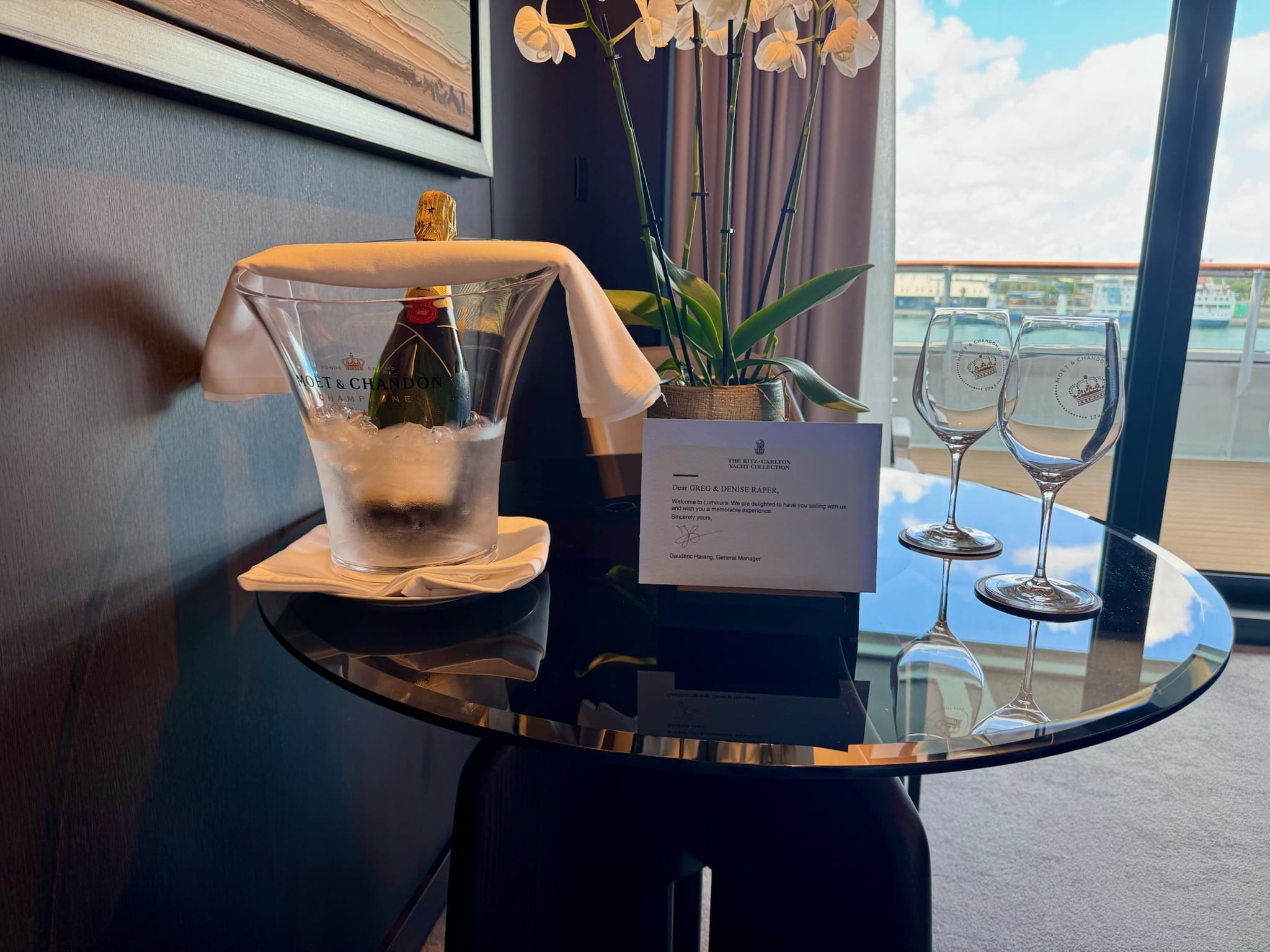
On most luxury cruise lines, Virtuoso benefits include a meaningful onboard credit. On designated Virtuoso Voyages — select sailings across lines like Regent Seven Seas, Silversea, Seabourn, and others — benefits are more substantial and typically include a choice of a larger onboard credit, a private car and driver, a specialty shore excursion, or an exclusive onboard experience.
The specifics vary by line and sailing, which is exactly why the conversation is worth having before you book rather than after.
If any of this is resonating — whether you’ve been curious about a specific category, a particular destination, or simply want to think through what might actually make sense for where you are right now — I’d love to talk.


